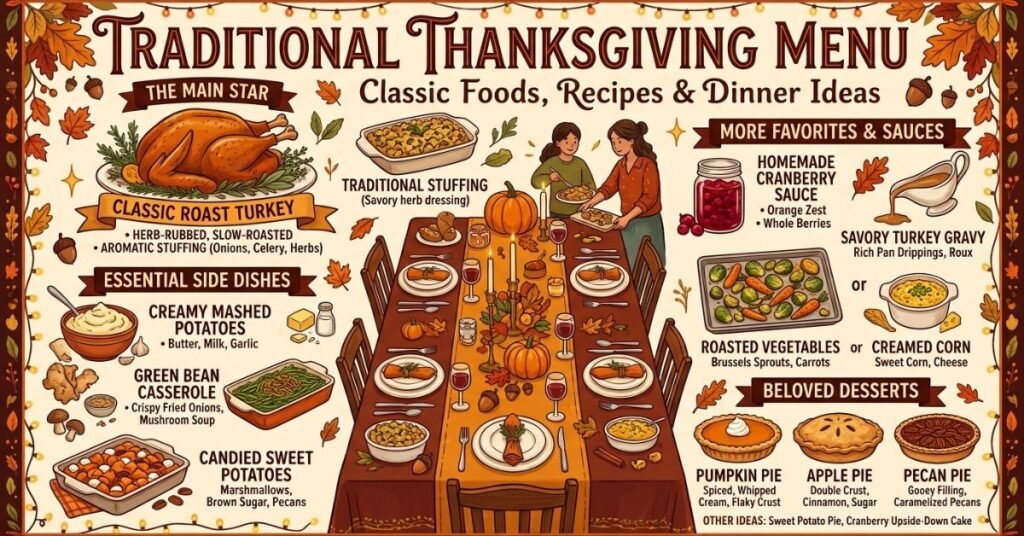

Every November, the same question lands in millions of kitchens: what actually belongs on a traditional Thanksgiving table? Family opinions vary, but a core group of dishes has stayed remarkably consistent for generations. This guide walks through the classic foods, practical recipes, and dinner ideas that make Thanksgiving feel like Thanksgiving, whether you’re cooking for twelve relatives or two.
I’ve hosted Thanksgiving dinners on tight budgets, in tiny apartments, and in a full farmhouse kitchen with three ovens going at once. The menu below reflects what consistently works: dishes that reheat well, hold their texture, and don’t require a culinary degree to pull off on a deadline.
This is a long guide, broken into sections you can jump between. If you already know you’re hosting a big traditional spread, start with the menu ideas and the ten classic foods. If you’re feeding two people or want something outside the usual turkey-and-stuffing formula, skip ahead to the simple menu or non-traditional ideas near the end.
Traditional Thanksgiving Menu Ideas
A solid Thanksgiving menu isn’t about cramming the table with twenty dishes. It’s about balance: one main protein, three to five sides, a bread, a condiment or two, and dessert. Trying to serve everything you’ve ever seen on Pinterest usually backfires, because your oven only has so much room and your Thursday only has so many hours.
Here’s a menu structure that has worked for crowds of every size:
- Main: Roast turkey (whole or spatchcocked for faster cooking)
- Starch: Mashed potatoes and cornbread or bread stuffing
- Vegetable sides: Green bean casserole, roasted Brussels sprouts, glazed carrots
- Sweet side: Candied sweet potatoes or a sweet potato casserole
- Bread: Dinner rolls, preferably homemade or bakery-fresh
- Condiment: Cranberry sauce and turkey gravy
- Dessert: Pumpkin pie and pecan pie
Once you have this skeleton, you can swap in regional or family favorites without losing the shape of the meal. The goal is a table where every dish has a job: something rich, something bright, something crunchy, something sweet.
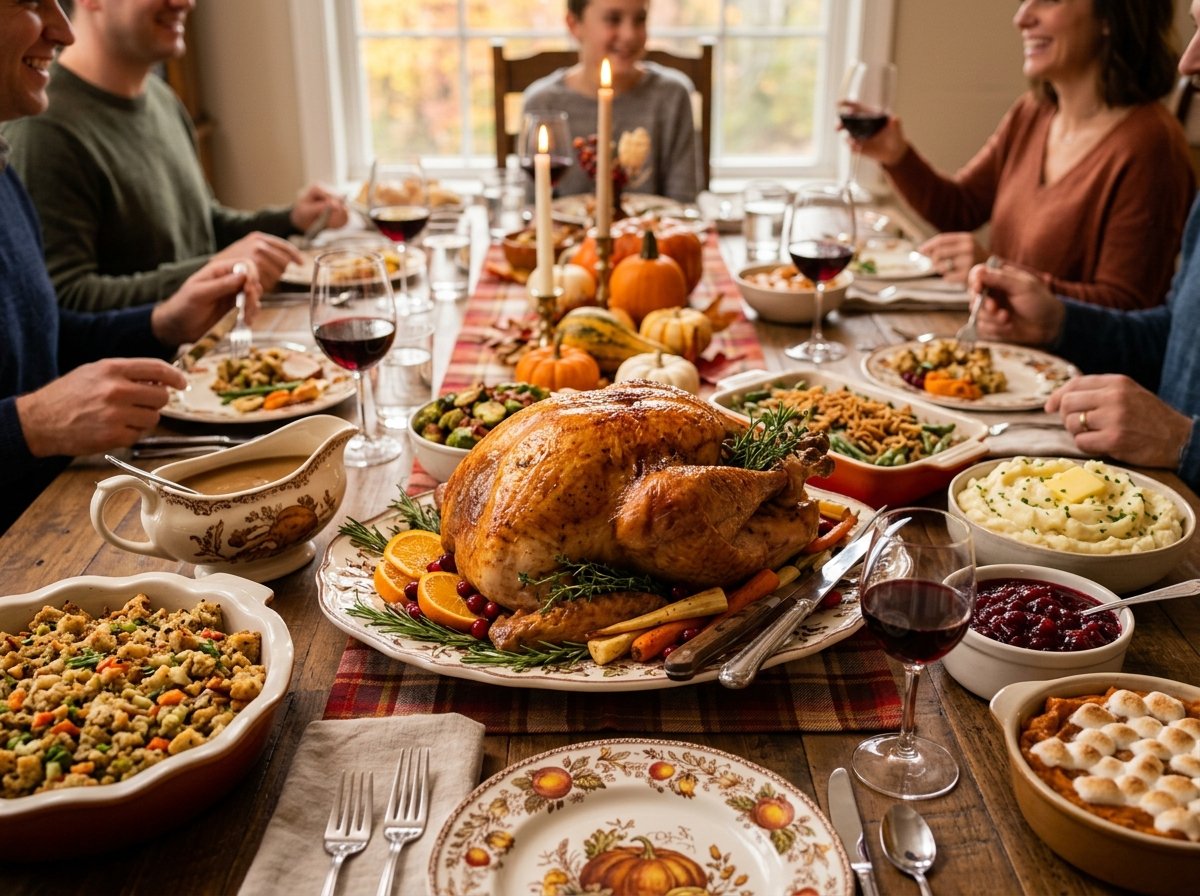
Traditional Thanksgiving Most Ordered
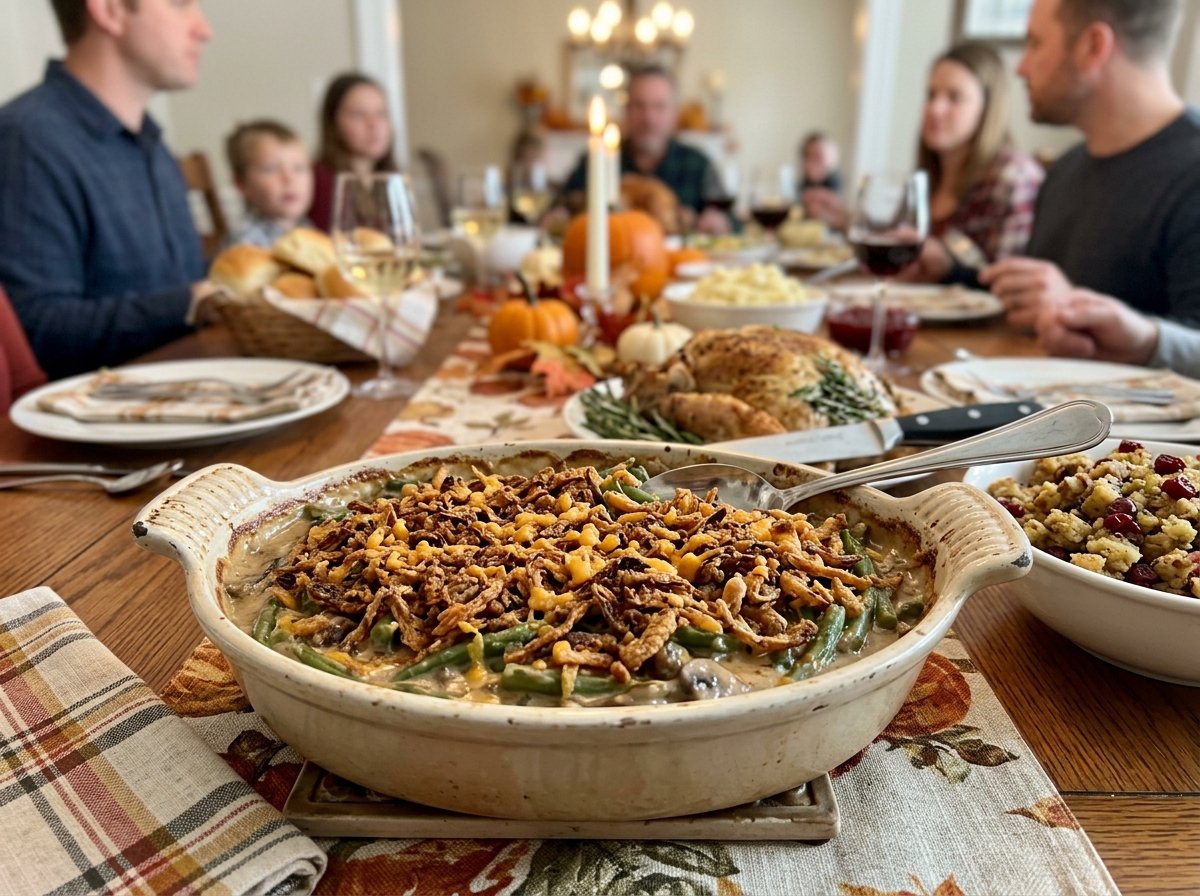
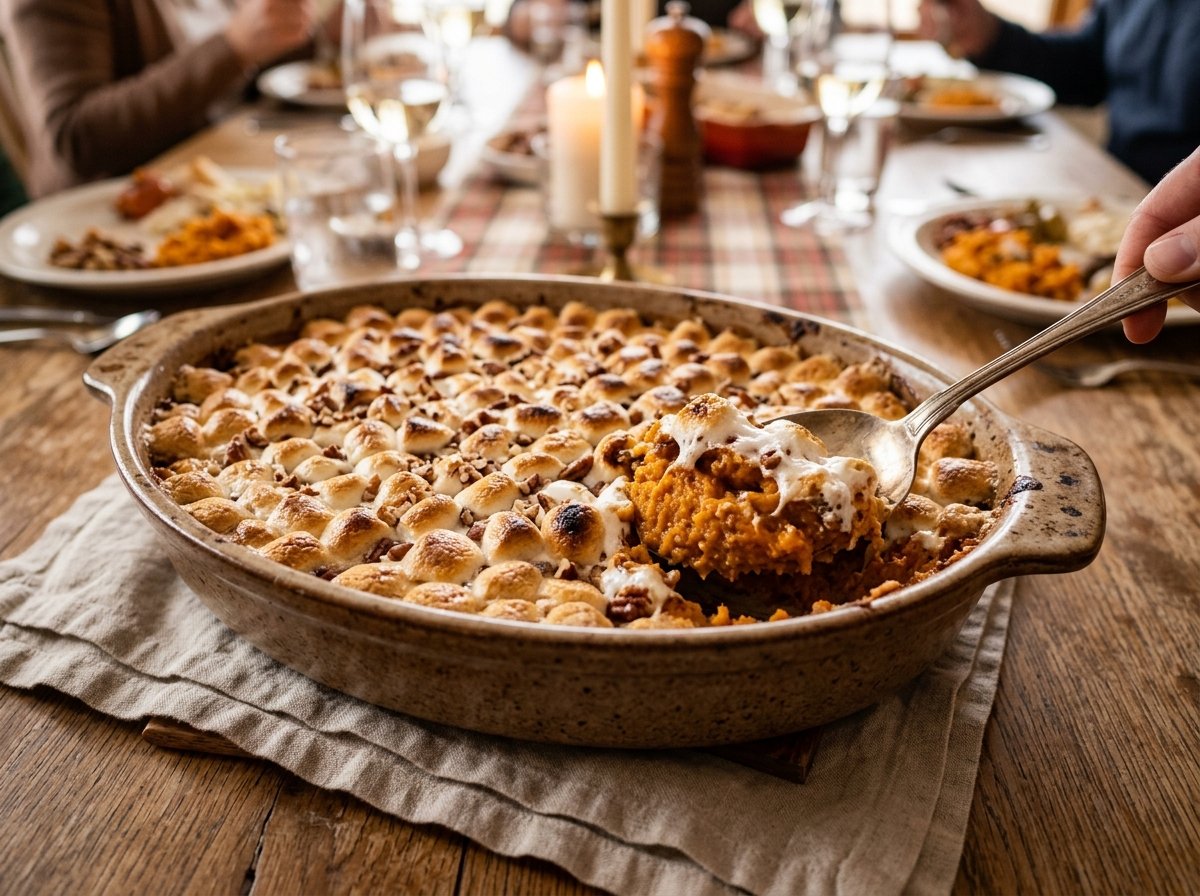
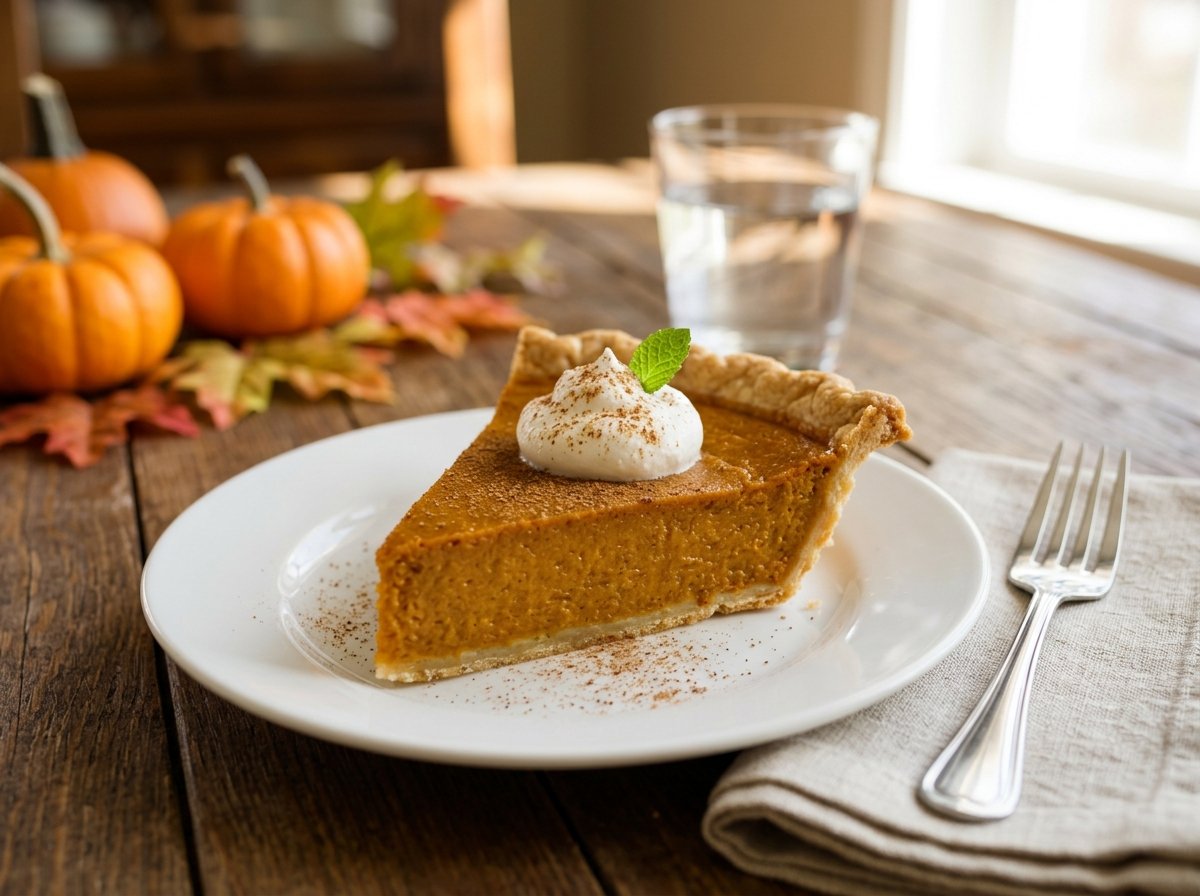
Sample Traditional Thanksgiving Table
| Course | Dish | Make-Ahead? |
|---|---|---|
| Main | Roast turkey with herb butter | No, cook day-of |
| Starch | Buttery mashed potatoes | Partially, reheat with milk |
| Starch | Cornbread stuffing | Yes, bake day-of |
| Vegetable | Green bean casserole | Assemble ahead, bake day-of |
| Vegetable | Roasted Brussels sprouts | No, roast fresh |
| Sweet side | Candied sweet potatoes | Yes, fully |
| Bread | Dinner rolls | Yes, freeze and reheat |
| Condiment | Cranberry sauce | Yes, up to a week ahead |
| Dessert | Pumpkin pie | Yes, a day ahead |
Planning the Cooking Timeline
The biggest source of Thanksgiving stress isn’t the recipes themselves, it’s the scheduling. A 20-pound turkey and five side dishes competing for one oven will wreck even a confident cook’s morning. A few practical fixes make a real difference:
- Two days before: Make cranberry sauce, bake pies, and prep any casseroles that just need a final bake.
- The night before: Brine or dry-brine the turkey, chop vegetables for stuffing, and set the table.
- Morning of: Get the turkey in first since it needs the most oven time, then work backward from your serving time for everything else.
- Last hour: Reheat sides while the turkey rests, since resting time buys you 30 to 45 minutes of oven space.
Working backward from serving time, rather than forward from when you wake up, tends to prevent the classic mistake of a turkey that’s ready two hours before anything else.
You May Also Like: Olive Garden Drink Menu: Complete List of Cocktails, Wines & Beverages
What Are the 10 Traditional Thanksgiving Foods?
If you strip a Thanksgiving table down to its essentials, ten dishes show up again and again across regions and generations. These are the foods most people picture when they hear the word “Thanksgiving.”
- Roast turkey – the centerpiece of nearly every American Thanksgiving table
- Stuffing or dressing – bread-based, seasoned with celery, onion, and sage
- Mashed potatoes – almost always paired with gravy
- Turkey gravy – made from pan drippings for real depth of flavor
- Cranberry sauce – whether canned or fresh, it cuts through the richness
- Green bean casserole – a mid-century staple that never left the table
- Sweet potato casserole – often topped with marshmallows or pecans
- Dinner rolls – soft, buttery, and made for soaking up gravy
- Pumpkin pie – the default dessert, spiced with cinnamon and nutmeg
- Pecan pie – a Southern addition that’s now nationwide
These ten dishes aren’t arbitrary. Food historians point out that most of them trace back to harvest availability in the Northeast and mid-Atlantic, where corn, squash, potatoes, and cranberries were plentiful in late fall. Turkey became the default protein partly because it was large enough to feed a crowd and didn’t compete with dairy or egg production the way chickens did.
Why These Foods Stuck Around
A few of these dishes have surprisingly specific origin stories. Green bean casserole, for instance, wasn’t a farmhouse recipe passed down through generations; it was created in a test kitchen in the 1950s to sell canned soup, and it simply never left the table once families tried it. Sweet potato casserole with marshmallows has a similar backstory rooted in early-1900s food marketing rather than old family tradition.
Other dishes earned their spot through practicality rather than marketing. Mashed potatoes and gravy stretch a meal further and reheat well, which mattered in eras before everyone had a second oven or a microwave. Cranberry sauce, whether homemade or canned, was one of the few tart, acidic elements on a table otherwise dominated by rich, starchy food, and that contrast is part of why it never got dropped.
Where Regional Variations Show Up
Even within “traditional,” there’s regional drift worth knowing about:
- New England: Leans on seafood starters, like oyster stuffing, alongside the standard turkey dinner.
- The South: Cornbread dressing instead of bread stuffing, sweet tea, and sweet potato pie rather than pumpkin.
- The Midwest: Hotdish-style casseroles and a strong wild rice presence, especially in Minnesota and Wisconsin.
- The Southwest: Green chile shows up in stuffing, gravy, or even the turkey rub itself.
None of these regional swaps make a menu less traditional. They just reflect what was actually growing, fishing, or being sold locally when these menus took shape a century ago.
Traditional Thanksgiving Menu Recipes
You don’t need fifteen new recipes to pull off a memorable Thanksgiving. You need a handful of reliable ones, executed well. Below are straightforward approaches to the dishes that matter most.
Roast Turkey
Pat the turkey dry, season generously with salt under and over the skin the night before if you can, and stuff the cavity with onion, celery, carrot, and a halved lemon. Roast at 325°F, tenting with foil once the skin browns, until the thickest part of the thigh reads 165°F. Let it rest at least 30 minutes before carving; skipping this step is the single biggest reason turkey ends up dry.
Classic Bread Stuffing
Cube day-old bread and let it dry out overnight. Sauté onion, celery, and garlic in butter, then toss with the bread, chicken or turkey stock, sage, thyme, and a beaten egg to bind everything. Bake covered for 30 minutes, then uncovered for another 15 to crisp the top.
Make-Ahead Mashed Potatoes
Boil peeled Yukon Gold potatoes in salted water until fork-tender, then mash with warm butter and warm milk or cream (cold dairy makes potatoes gummy). For make-ahead versions, spread mashed potatoes in a buttered dish, dot with more butter, and reheat covered at 350°F for 30 minutes before serving.
Simple Pan Gravy
After removing the turkey, pour off the drippings and skim the fat. Whisk the fat with an equal amount of flour in a saucepan over medium heat for two minutes, then slowly whisk in the drippings and stock until smooth and thickened. Season with salt and pepper at the end, not before.
Green Bean Casserole from Scratch
Blanch fresh green beans for three minutes, then shock them in ice water to keep the color bright. Make a quick mushroom sauce with butter, sliced mushrooms, garlic, flour, and chicken stock, finished with a splash of cream. Fold the beans into the sauce, top with crispy fried onions, and bake at 375°F for 20 minutes until bubbling.
Cranberry Sauce with Orange Zest
Simmer fresh cranberries with sugar, water, and orange zest until the berries burst and the mixture thickens, about 10 to 15 minutes. Let it cool completely before serving; it will thicken further as it chills. This version keeps well in the refrigerator for up to a week, making it one of the easiest make-ahead dishes on the table.
Common Recipe Mistakes to Avoid
A few small errors account for most Thanksgiving kitchen disasters:
- Roasting the turkey straight from the fridge, which leads to uneven cooking. Let it sit at room temperature for 30 to 60 minutes first.
- Skipping the turkey rest, which drains the juices onto the cutting board instead of keeping them in the meat.
- Adding cold dairy to hot mashed potatoes, which cools them down and makes the texture gluey.
- Salting gravy before it’s reduced, since the flavor concentrates as the liquid cooks down.
- Overbaking casseroles that were already fully cooked before assembly, which dries out the topping.
Old-Fashioned Thanksgiving Dinner
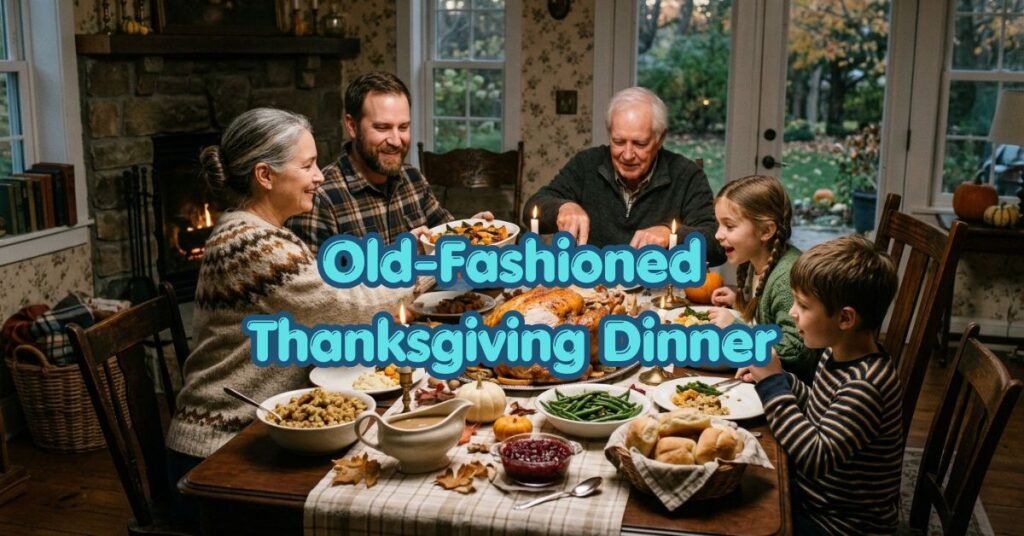
An old-fashioned Thanksgiving dinner leans into dishes your grandparents would recognize immediately, no modern twists, no trendy substitutions. Think giblet gravy instead of a quick pan version, cornbread dressing baked in a cast-iron skillet, and a pie crust made entirely by hand with cold butter and ice water.
Common markers of an old-fashioned spread include:
- Turkey stuffed and roasted whole, rather than spatchcocked
- Giblets simmered separately for stock and gravy
- Candied sweet potatoes with brown sugar and butter, no marshmallows
- Homemade cranberry relish with orange zest instead of canned sauce
- Pies with lattice or hand-crimped crusts, baked from scratch
This style of cooking takes longer and leans on techniques rather than shortcuts, but many families keep it alive specifically because the process itself feels like part of the holiday, not just the food at the end of it.
An old-fashioned dinner also tends to include dishes that have quietly fallen out of fashion but were once standard: oyster stuffing in coastal households, a relish tray with pickles and olives set out before the meal even starts, and a dedicated pie table rather than a single dessert option.
If you’re trying to recreate this style, the biggest shift is usually in mindset rather than ingredients: plan for a longer cooking day, lean on stovetop stock-making, and treat shortcuts like gravy packets or canned pie filling as things to avoid rather than convenient options.
Simple Thanksgiving Menu
Not every Thanksgiving needs to be a production. A pared-down menu works well for smaller gatherings, first-time hosts, or anyone who’d rather spend the day with people instead of standing over a stove.
A simple, low-stress menu might include:
- Turkey breast (bone-in, roasted) instead of a whole bird
- One starch: garlic mashed potatoes
- One vegetable: roasted green beans with olive oil and lemon
- Store-bought or semi-homemade rolls
- Canned cranberry sauce, dressed up with orange zest
- One dessert: pumpkin pie from a good bakery or a simple homemade version
You May Also Like: Flix Brewhouse Menu Prices: What You’ll Actually Pay Before You Sit Down
Full Turkey vs. Turkey Breast: A Quick Comparison
| Factor | Whole Turkey | Turkey Breast |
|---|---|---|
| Cook time | 3–4 hours (for a 12–14 lb bird) | 1.5–2 hours |
| Serves | 10–14 people | 4–6 people |
| Oven space needed | High | Low |
| Leftovers | Plenty, both dark and white meat | Limited, white meat only |
| Best for | Larger family gatherings | Small households, easier cleanup |
Scaling down the menu doesn’t mean scaling down the flavor. Fewer dishes actually means more attention on each one, which often makes a simple Thanksgiving taste better than a sprawling one.
Tips for Cooking Thanksgiving for a Small Group
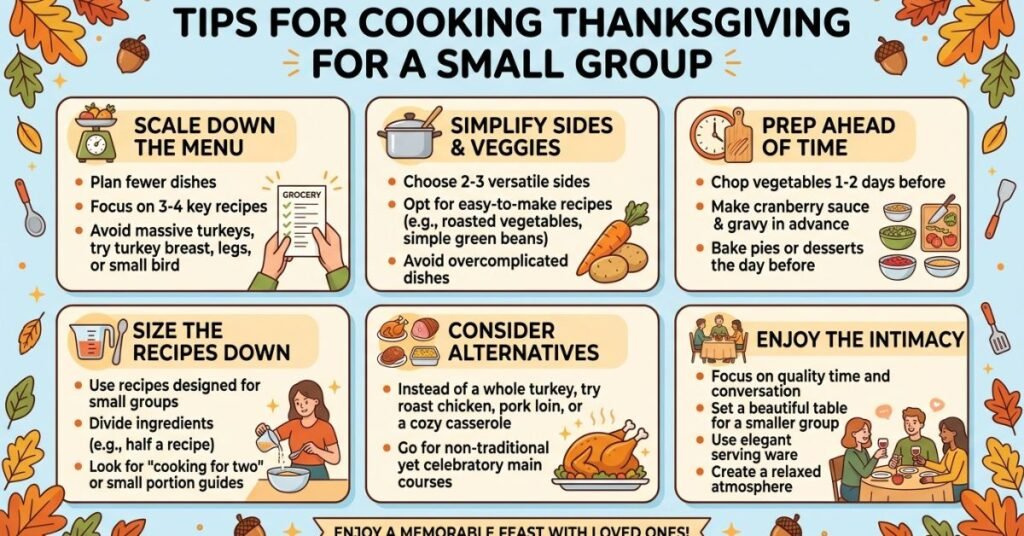
Cooking Thanksgiving dinner for two to four people comes with its own set of problems, mostly around leftovers and equipment that’s sized for a crowd. A few adjustments help:
- Buy a turkey breast or turkey thighs instead of a whole bird, since a whole turkey under 12 pounds can be hard to find and doesn’t cook much faster than a larger one.
- Use a toaster oven or air fryer for smaller side dishes so the main oven stays free for the turkey.
- Halve casserole recipes and bake them in an 8×8 dish instead of a full 9×13.
- Buy fewer, higher-quality ingredients rather than large-format grocery packs meant for bigger households.
- Plan intentional leftovers, like extra mashed potatoes for turkey pot pie the next day, rather than accidental waste.
A simple Thanksgiving also opens the door to cooking everything on the stovetop and in one oven without a rigid timeline, which takes a lot of the pressure off first-time hosts.
Traditional Thanksgiving Menu for a Black Family
Many Black American households build their Thanksgiving table around soul food, a cuisine rooted in Southern cooking traditions carried forward through generations. The result is a Thanksgiving spread that overlaps with the classic American menu in some places and diverges sharply in others.
A traditional Black family Thanksgiving menu often includes:
- Turkey and/or a honey-baked ham, sometimes both, served side by side
- Cornbread dressing rather than a bread-based stuffing, often with gizzards or sausage mixed in
- Collard greens, slow-simmered with smoked turkey or ham hocks
- Candied yams, deeply spiced with cinnamon and brown sugar
- Baked macaroni and cheese, treated as a main side dish rather than a kids’ menu item
- Black-eyed peas or red beans and rice
- Sweet potato pie, which is distinct from pumpkin pie in both texture and flavor
- Caramel cake or red velvet cake alongside or instead of traditional pies
One detail worth noting: green bean casserole, a staple on many American tables, is often replaced with seasoned green beans cooked low and slow with smoked meat, rather than the canned mushroom soup version. The through-line across most Black family Thanksgiving tables is that recipes are passed down rather than looked up, often with no measurements written anywhere.
Building a Soul Food Thanksgiving Table
If you’re putting together this kind of menu for the first time, start with the proteins and build outward. A common structure looks like this:
| Course | Dish | Notes |
|---|---|---|
| Main | Turkey and honey-baked ham | Serving both is common for larger families |
| Starch | Cornbread dressing | Baked separately from the bird, not stuffed inside |
| Vegetable | Collard greens | Simmered for hours with smoked turkey or ham hock |
| Vegetable | Candied yams | Sweeter and more spiced than standard candied sweet potatoes |
| Side | Baked macaroni and cheese | Treated as a main dish, not a side for kids |
| Side | Black-eyed peas or red beans and rice | Common in Southern and Gulf Coast households |
| Bread | Buttermilk cornbread or sweet potato rolls | Often made from scratch in a cast-iron skillet |
| Dessert | Sweet potato pie and caramel or red velvet cake | Sweet potato pie is spiced differently than pumpkin pie |
Seasoning is where this menu diverges most from the standard American table. Smoked meat, hot sauce, and a heavier hand with black pepper and cayenne show up across nearly every savory dish, which is part of what gives soul food Thanksgiving its distinct character compared to a more neutral, herb-forward New England-style spread.
Traditional Thanksgiving Menu with Marshmallow
The marshmallow-topped sweet potato casserole is one of the most divisive dishes on the Thanksgiving table. Some households consider it non-negotiable; others won’t let it near the table. It became popular in the early 20th century, largely through marketing from marshmallow manufacturers looking to sell more product.
A classic version layers mashed or sliced sweet potatoes with butter, brown sugar, and warm spices like cinnamon and nutmeg, then finishes with a thick layer of mini marshmallows broiled until golden and slightly charred at the edges. The contrast between the creamy, spiced sweet potato base and the toasted marshmallow top is the entire appeal.
Tips for getting the marshmallow topping right:
- Broil rather than bake for the final few minutes, watching closely since marshmallows burn fast
- Use mini marshmallows for even coverage instead of large ones
- Add the marshmallow layer only in the last 5–10 minutes of baking so it doesn’t melt into the casserole
- Balance sweetness by keeping added sugar in the base moderate, since the marshmallows add plenty on their own
If your family is split on marshmallows, a middle-ground approach works well: top half the casserole dish with marshmallows and the other half with a pecan streusel crumble. Everyone gets their preferred version without needing two separate casseroles taking up oven space.
Marshmallow Sweet Potato Casserole vs. Pecan-Topped Version
| Factor | Marshmallow Topping | Pecan Streusel Topping |
|---|---|---|
| Texture | Soft, gooey, slightly chewy | Crunchy, buttery |
| Sweetness level | Very sweet | Moderate, more savory-sweet |
| Prep time | Quick, just broil at the end | Requires making a crumble mixture |
| Kid appeal | Very high | Moderate |
| Make-ahead friendly | Add topping fresh, don’t pre-broil | Can be assembled fully ahead |
Non-Traditional Thanksgiving Dinner Ideas
Not everyone wants turkey and stuffing, and that’s fine. A growing number of households are building Thanksgiving menus around different cuisines entirely, or reworking the classics into new formats.
Some popular non-traditional directions:
- Italian-American Thanksgiving: Lasagna or baked ziti instead of turkey, garlic bread instead of rolls, tiramisu instead of pie
- Tex-Mex spread: Smoked or fried turkey with cornbread, plus tamales, rice, and beans
- Vegetarian centerpiece: Stuffed acorn squash, mushroom Wellington, or a hearty lentil loaf in place of the bird
- Seafood-forward menu: Roasted salmon or a seafood boil, especially common in coastal households
- Fusion sides: Kimchi mac and cheese, curried sweet potatoes, or miso-glazed Brussels sprouts
None of these choices make a Thanksgiving less “real.” The holiday’s actual throughline is gathering and gratitude, not a specific ingredient list. Many families run a hybrid table: one traditional dish for nostalgia, surrounded by whatever the household actually enjoys eating.
Why Households Are Moving Away from Tradition
A few practical reasons show up again and again when people explain why they’ve dropped the standard turkey dinner. Cooking for one or two people makes a 15-pound turkey impractical no matter how good the leftovers taste. Dietary restrictions, including vegetarian, vegan, and gluten-free needs, are more common in mixed households than they were a generation ago. And frankly, some people just don’t enjoy turkey enough to build an entire holiday meal around it.
If you’re building a non-traditional menu but still want it to feel like a proper holiday spread, keep the meal structure even while swapping ingredients: one hearty main, two or three sides, bread, and a dessert. The format is what signals “holiday dinner” to most guests, more than any specific dish does.
Blending Traditional and Non-Traditional on One Table
A hybrid approach tends to satisfy the widest range of guests without doubling your workload:
- Keep one anchor dish everyone expects, like turkey or pumpkin pie, even if the rest of the menu changes.
- Let one dish represent a different cuisine or family tradition, rather than overhauling the entire table.
- Ask guests in advance what dish they’d genuinely miss if it disappeared, and keep that one non-negotiable.
- Treat side dishes as the most flexible part of the menu, since they carry less emotional weight than the main course or dessert.
Frequently Asked Questions
What are the 12 most popular Thanksgiving dishes?
Roast turkey, stuffing, mashed potatoes, gravy, cranberry sauce, green bean casserole, sweet potato casserole, dinner rolls, mac and cheese, cornbread, pumpkin pie, and pecan pie.
What are 5 traditional Thanksgiving foods?
Turkey, stuffing, mashed potatoes with gravy, cranberry sauce, and pumpkin pie form the core of most traditional menus.
What dish is traditionally served at Thanksgiving?
Roast turkey is the dish most closely associated with Thanksgiving, typically served alongside stuffing, potatoes, and cranberry sauce.
Final Thoughts
A traditional Thanksgiving menu isn’t a fixed rulebook; it’s a rough outline that families have filled in differently for generations, depending on region, heritage, and what grandma always made. Whether you stick with the classic ten dishes, lean into an old-fashioned approach, build a soul food table, or go fully non traditional, the details that matter most are the ones that make your specific table feel right. Start with a main, build out balanced sides, and don’t be afraid to trim the list down if it’s serving four people instead of fourteen.