
Ordering a Chipotle burrito sounds simple. Then you’re stuck in line watching the person ahead of you customize eleven ingredients. This guide breaks down what goes into a Chipotle burrito, what it costs, and what it does to your calorie count.
Everything here comes from Chipotle’s published nutrition data and allergen statement. Pricing is set locally, not nationally. So instead of quoting one “official” number, we’ll give realistic ranges and tell you where to check your exact store price.
Most people order the same burrito every visit. That makes sense until you realize how much a small swap changes things. Two people can order what looks like the same burrito and end up with meals that differ by 300 calories, just from a few topping choices.
Chipotle Burrito: Builds Worth Knowing

Chipotle Burrito Nutrition Facts
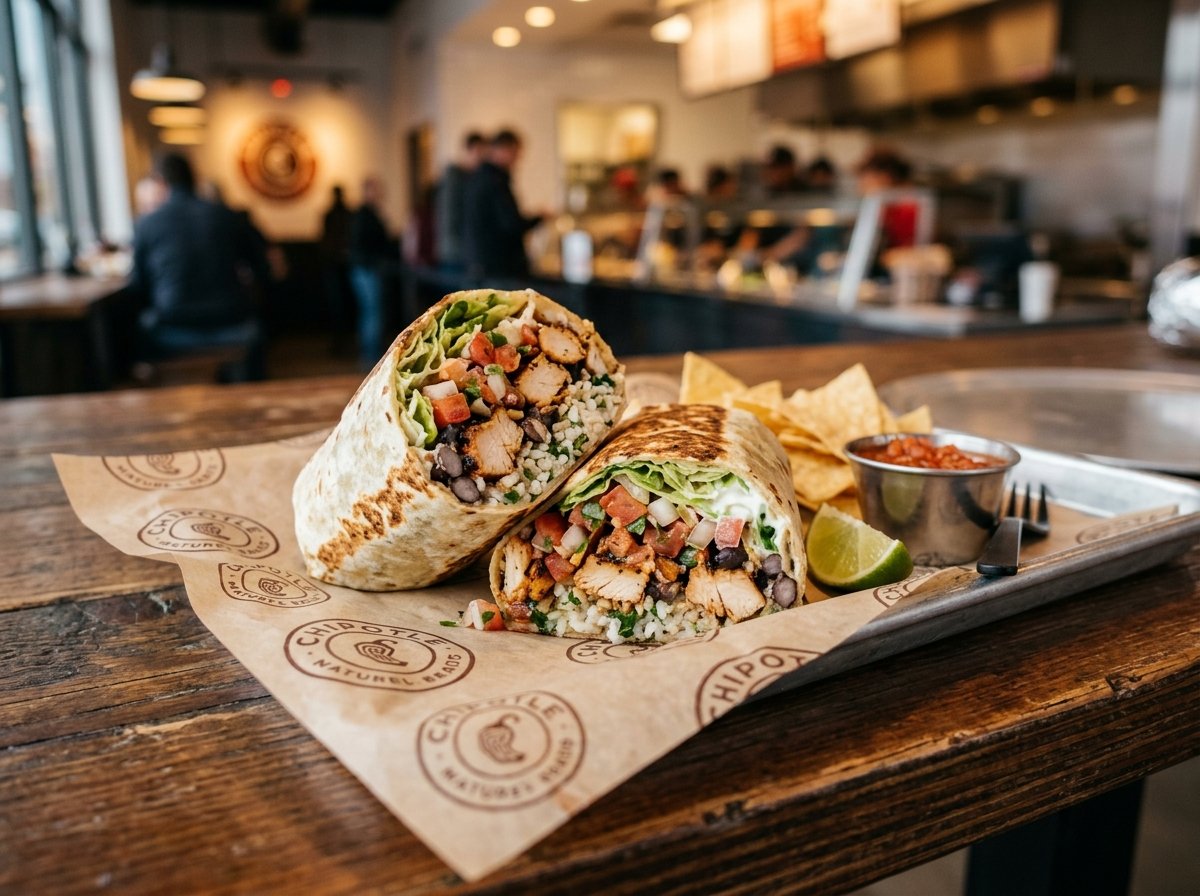
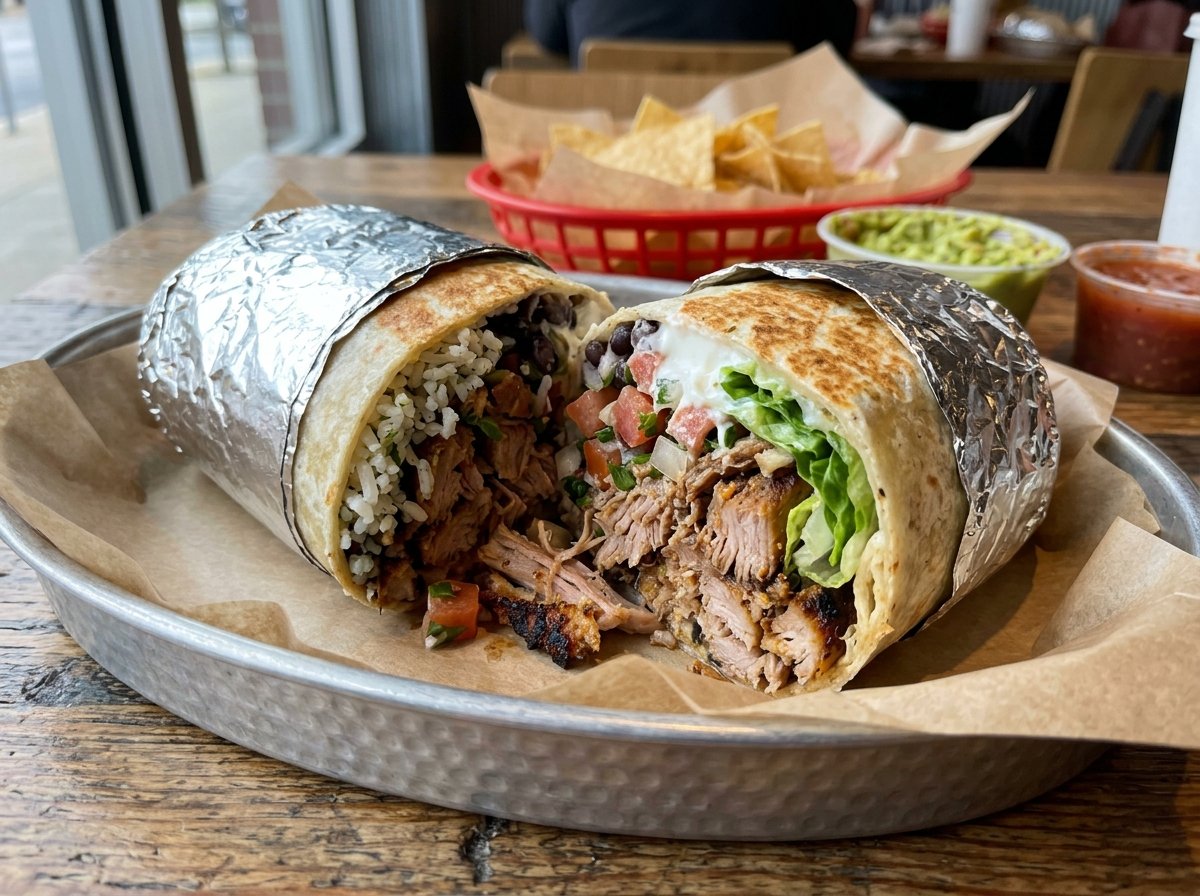
A standard burrito includes a flour tortilla, rice, beans, one protein, salsa, and either cheese or sour cream. Depending on your build, a full burrito lands between roughly 740 and 1,210 calories. The tortilla alone is 320 of those calories before any topping goes in.
| Component | Serving | Calories | Protein | Notes |
|---|---|---|---|---|
| Flour tortilla | 1 each | 320 | 8g | Contains wheat and gluten |
| Cilantro-lime rice | 4 oz | 210 | 4g | White or brown, similar calories |
| Black or pinto beans | 4 oz | 130 | 8g | Both land at the same calorie count |
| Chicken | 4 oz | 180 | 32g | Highest protein-to-calorie ratio |
| Steak | 4 oz | 150 | 21g | Lowest calorie meat besides sofritas |
| Barbacoa | 4 oz | 170 | 24g | Shredded beef, braised |
| Carnitas | 4 oz | 210 | 23g | Highest calorie meat option |
| Sofritas | 4 oz | 150 | 8g | Plant-based, lowest protein |
| Cheese | 1 oz | 110 | 6g | Standard scoop |
| Sour cream | 2 oz | 110 | 2g | |
| Guacamole | 4 oz | 230 | 2g | Usually an extra charge |
A chicken burrito with white rice, black beans, fresh tomato salsa, and cheese runs close to 950 calories. Order it as a bowl instead and skip the tortilla. That same build drops under 650 calories.
The tortilla, not the protein, is usually the biggest lever for cutting calories. Sodium is worth watching too. The tortilla alone brings 600 milligrams, and salsas add another 250 to 550 depending on which one you pick.
A fully loaded burrito with two salsas and cheese can push past 1,800 milligrams of sodium.
That’s most of a full day’s recommended intake in one meal.
| Format | Typical calorie range | Tortilla included | Best for |
|---|---|---|---|
| Burrito | 740–1,210 | Yes | Portability, bigger appetite |
| Burrito bowl | 420–910 | No | Lower calories, same flavor |
| Salad | 420–910 | No | Lightest option, includes greens |
| Tacos (3) | 390–1,140 | Small corn or flour | Portion control, smaller bites |
The bowl and the burrito use identical ingredients behind the counter. The calorie gap comes entirely from the tortilla. If you like burrito flavor but want bowl-level calories, ask for a side tortilla instead of a wrapped one.
You May Also Like: Taco Bell Mini Taco Salad: Price, Calories, and Everything Else You Need to Know
Chipotle Burrito Ingredients
Every burrito starts with the same structure: tortilla, protein, rice, beans, salsa, and a topping or two. What separates one order from another is which version of each you pick. Below is a category-by-category look at what’s available, including how it connects to the Chipotle tacos menu for anyone comparing formats.
Protein or Veggie Choices
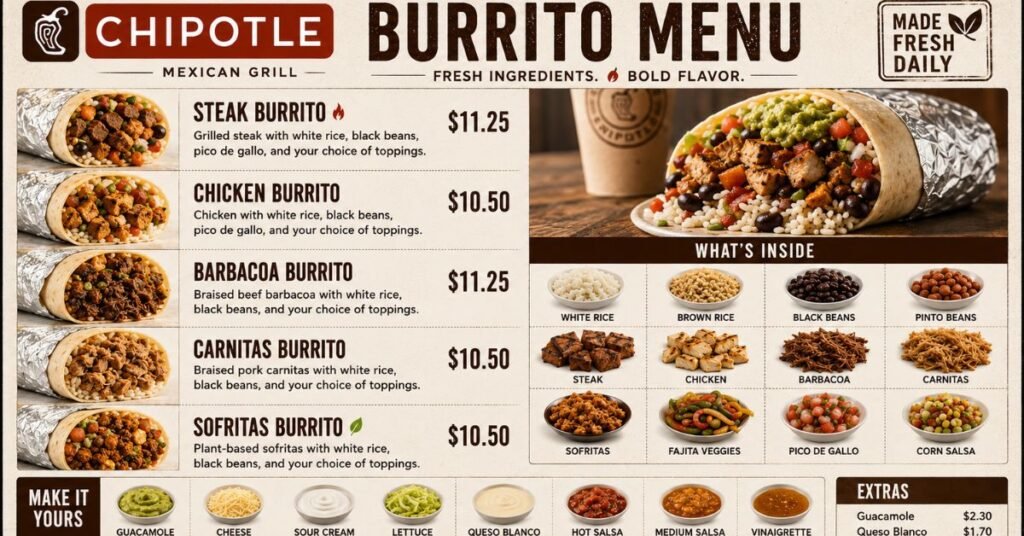
Chipotle offers six proteins, plus a veggie option built around extra beans and free guacamole. Chicken has the highest protein count per serving. Steak and sofritas sit lowest in calories.
Carnitas carries the richest flavor and the highest fat content of the group.
| Protein | Calories (4 oz) | Protein (g) | Best for |
|---|---|---|---|
| Chicken | 180 | 32 | Protein-per-calorie value |
| Steak | 150 | 21 | Lower-calorie meat option |
| Barbacoa | 170 | 24 | Shredded, spiced beef |
| Carnitas | 210 | 23 | Richest flavor |
| Sofritas | 150 | 8 | Plant-based, vegan |
| Veggie | 230 | Varies | Vegetarian, includes free guac |
Double protein is available at most locations for an added charge. It roughly doubles the protein total of whichever meat you choose, making it the fastest way to boost protein without changing anything else.
Rice Options
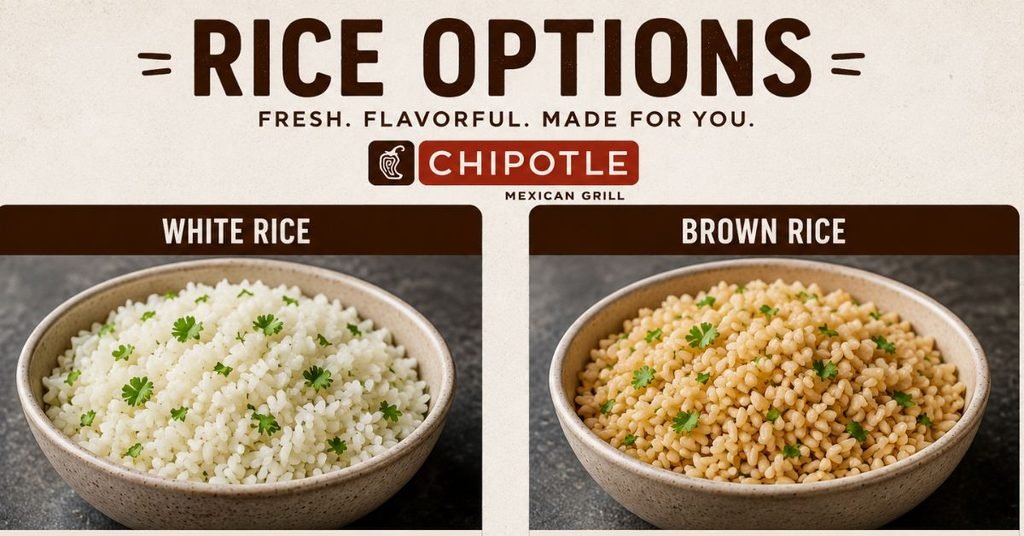
Chipotle offers cilantro-lime rice in white or brown. Both land at 210 calories per 4-ounce scoop, so the choice comes down to taste rather than calories. Brown rice carries slightly more fiber.
White rice has a lighter, less nutty flavor. It pairs more neutrally with spicier proteins and salsas.
You can also ask for a half scoop of rice. That shaves roughly 100 calories off the build, and staff are used to the request.
Bean Options
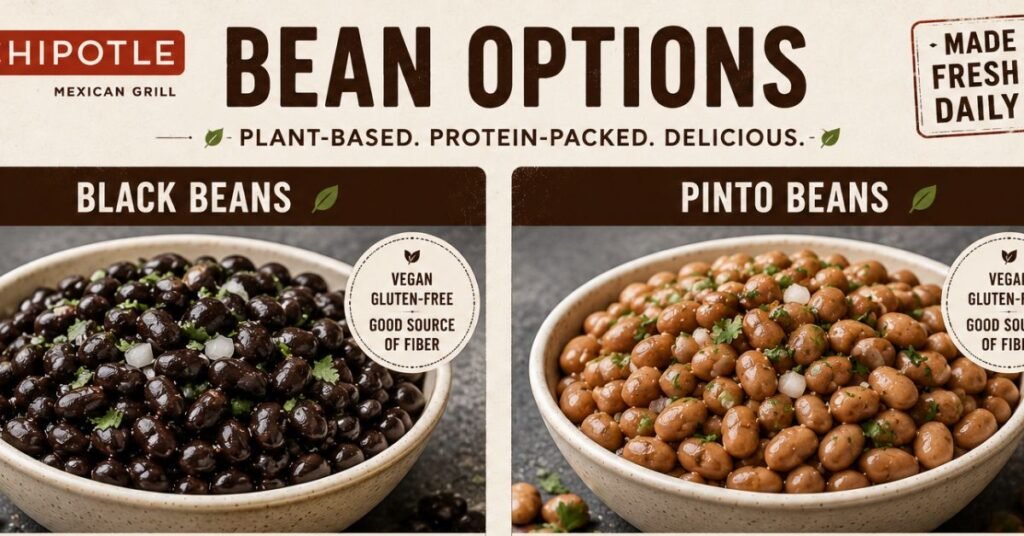
Black beans and pinto beans both land at 130 calories per 4-ounce serving. Each carries 8 grams of protein and 7 to 8 grams of fiber. The nutritional difference is minor.
Black beans have a firmer texture. Pinto beans are softer and creamier once scooped into a warm tortilla.
You can order both beans in the same burrito at no extra charge. It’s a common move for boosting fiber and protein without adding more meat.
Toppings
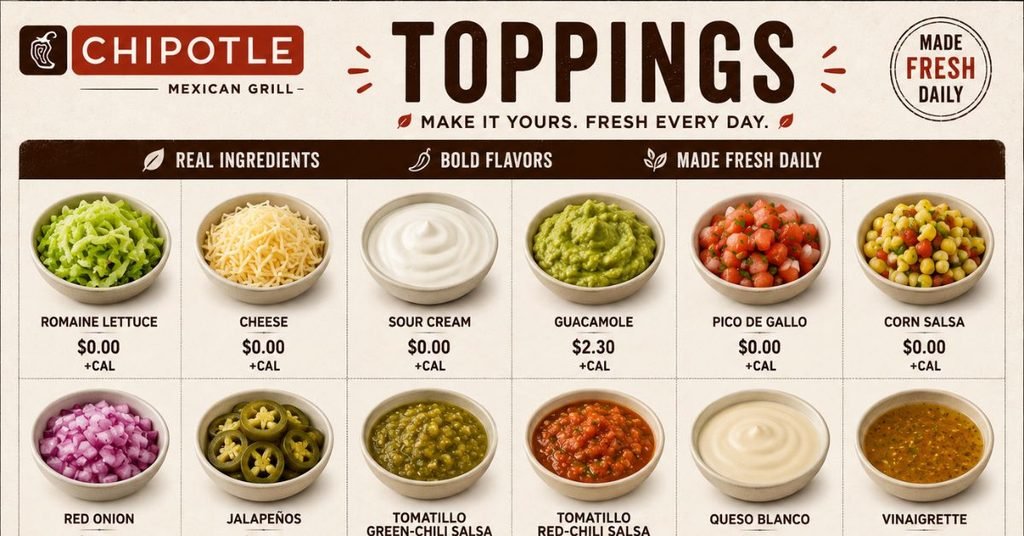
Toppings are where the calorie count swings the most. Salsas range from 15 calories for tomatillo-green chili up to 80 for roasted chili-corn. Cheese and sour cream each add 110 calories.
Guacamole adds 230 calories. Queso blanco, where available, adds around 120 calories per standard portion.
- Mild: Fresh tomato salsa, 25 calories
- Medium: Tomatillo-green chili salsa, 15 calories
- Medium-hot: Tomatillo-red chili salsa, 30 calories
- Sweet-spicy: Roasted chili-corn salsa, 80 calories
Stacking two or three richer toppings is the fastest way to push a burrito from 700 calories past 1,100. If you’re watching your total, pick one creamy topping and one salsa, not everything on the line.
Tortilla Options
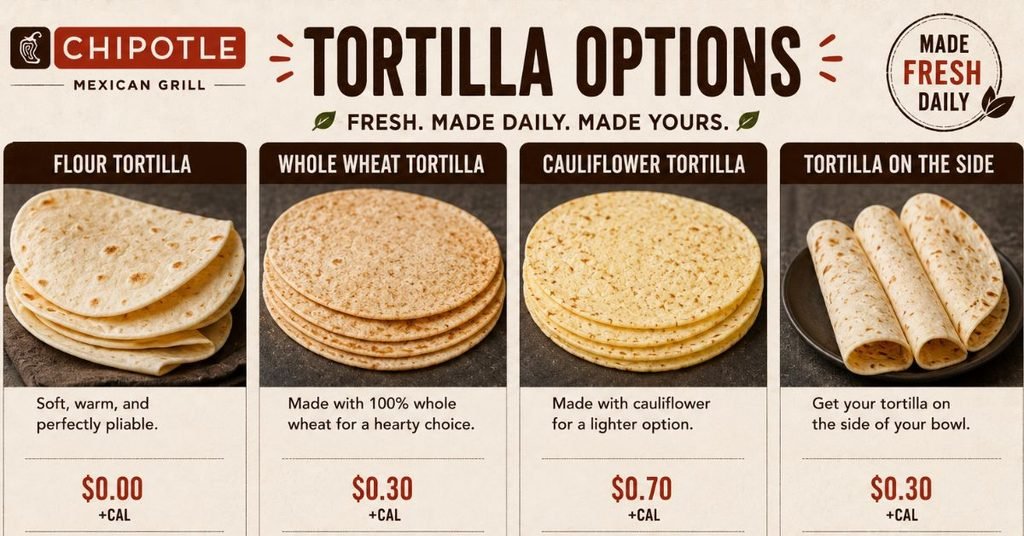
The standard burrito tortilla is a large flour tortilla at 320 calories, 9 grams of fat, and 600 milligrams of sodium. There’s no separate corn tortilla option for burritos, since corn tortillas are sized for tacos.
If you need to avoid gluten, the burrito format isn’t an option. Ordering the same ingredients as a bowl gets you the identical flavor without the tortilla.
You May Also Like: Big Boy Restaurant Menu: Prices, Specials, and What’s Actually Worth Ordering
Chipotle Burrito Allergens
Chipotle’s official allergen statement confirms the chain doesn’t use eggs, mustard, peanuts, tree nuts, sesame, shellfish, or fish as ingredients. That makes the burrito line naturally friendly to several common allergies without any special ordering.
That said, three allergens do show up regularly:
- Wheat and gluten: Found only in the flour tortilla. Bowls, salads, and corn-tortilla tacos avoid it entirely.
- Dairy: Present in cheese, sour cream, and queso blanco. Skip all three for a dairy-free build.
- Soy: Found in sofritas and in the chipotle-honey vinaigrette used on salads.
Chipotle prepares food in shared spaces with shared utensils. Cross-contact is possible even when a specific allergen isn’t part of your order.
If you have a severe allergy, tell the crew before they start building your meal. Ask for a glove change. Chipotle’s full allergen chart is also available in the app and at chipotle.com.
How to Order a Chipotle Burrito (Smart Ordering Tips)
The burrito line moves fast. It’s easy to end up with a build you didn’t plan on just because you said “yes” to everything the crew member asked. A few adjustments at order time change the calories, protein, or price without changing how it tastes.
If You Want a Burrito That Tastes Big but Stays “Reasonable” on Calories
Ask for a half scoop of rice, one bean, one protein, and fresh tomato salsa. Skip either the cheese or the sour cream rather than adding both. This trims 150 to 250 calories off a fully loaded build.
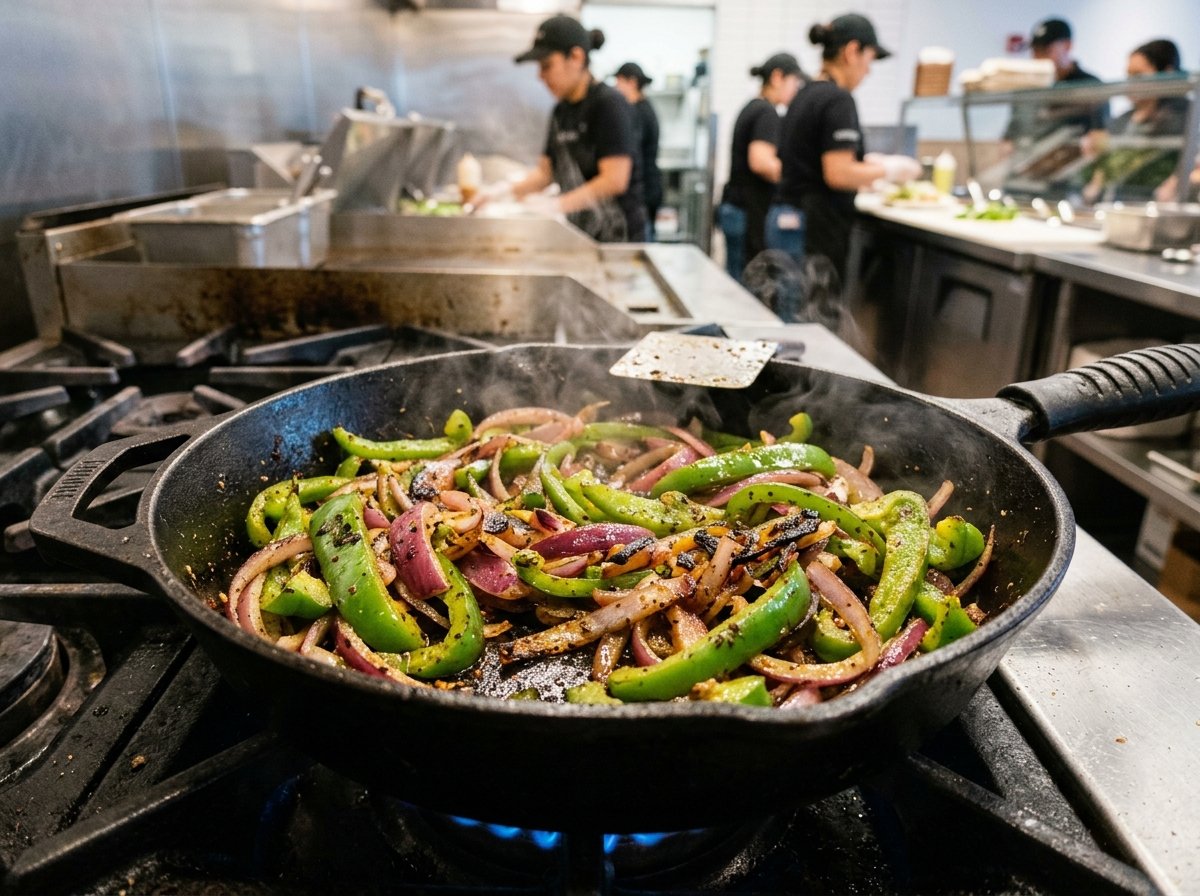
Fajita veggies add volume for almost no calorie cost.
If You Want Maximum Protein
Order double chicken, since it carries the highest protein-per-calorie ratio of any Chipotle protein. Add black beans for another 8 grams. Skip rice in favor of extra beans or fajita veggies if you’re also managing carbs.
This build regularly clears 60 grams of protein in a single burrito.
If You Want the Cheapest “Full Meal” Burrito
Stick to one protein. Skip guacamole and queso, since both carry an added charge at most locations. Load up instead on the free toppings: rice, beans, salsa, lettuce, and fajita veggies.
A single-protein burrito with no premium add-ons is consistently the lowest-cost way to get a full entrée.
Sofritas and veggie burritos are worth a look too. The veggie option includes guacamole at no extra charge in most markets, which offsets one of the pricier add-ons.
Chipotle Nutrition & Allergen Information
For the most current calorie, macro, and allergen data tied to your exact order, use Chipotle’s nutrition calculator on chipotle.com or in the app. Recipes and sourcing shift slightly by season and region.
The numbers in this guide reflect Chipotle’s standard published nutrition chart. Treat them as a reliable baseline, but the app will always reflect your specific location’s current build.
Pricing works the same way. Chipotle sets menu prices locally, so a chicken burrito in one city can cost noticeably more than the same order across the state.
Check the price directly in the app before you order. It updates automatically based on your selected location.
Frequently Asked Questions
What meal is $3.50 at Chipotle?
At that price point you’re generally looking at a single item, such as one taco or a small side, rather than a full entrée. Full burritos, bowls, and salads run higher almost everywhere.
What can I get at Chipotle for $5?
Five dollars typically covers a side item, a drink, or gets you close to a discounted kids’ meal in some markets. It generally isn’t enough for a full burrito or bowl.
What can I get for $9 at Chipotle?
Nine dollars is close to the starting price for a base burrito or bowl with one protein and standard free toppings at many locations. It can run higher in expensive markets, so check the app first.
What is the most popular burrito at Chipotle?
The chicken burrito is consistently the most-ordered protein choice nationwide. It offers the highest protein count of any option while staying on the lower end of the calorie range.
Final Thoughts
A Chipotle burrito is really a set of small decisions stacked on top of each other. Protein, rice, beans, salsa, and toppings each carry their own calorie and price impact.
Once you know which choices move the needle, you can build a burrito that fits your goals without giving up what you actually go there for. Check the app for your local price and exact nutrition before you order, since both shift by location and season.